

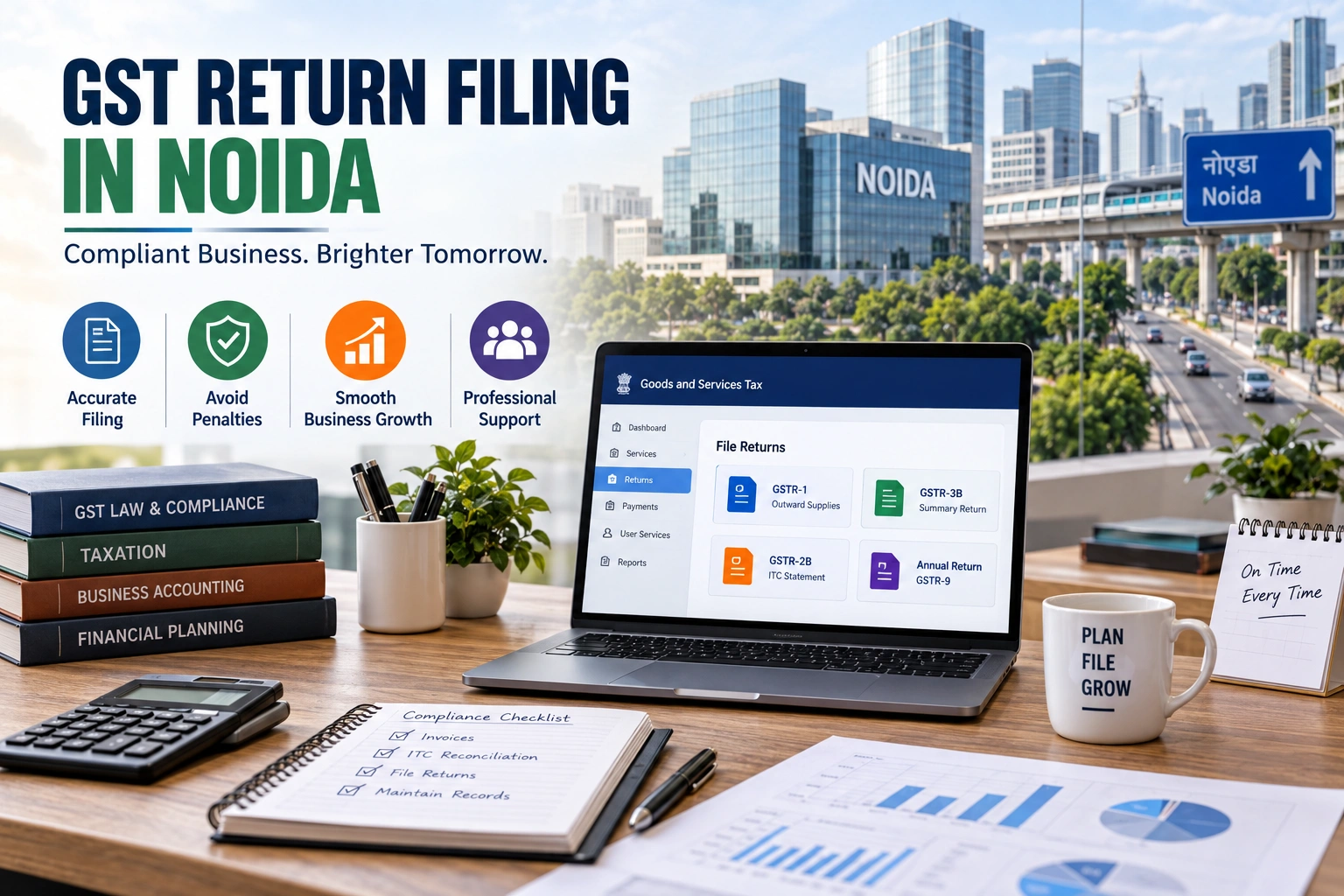
GST Return Filing in Noida
For businesses operating in Noida, maintaining accurate tax records and completing GST compliance on time is an important part of financial management. GST Return Filing in Noida involves more than simply submitting a return on the GST portal. Businesses need to maintain accurate sales and purchase records, reconcile eligible input tax credit, review invoices, and ensure that the information reported in different GST forms is consistent.
The process can become particularly important for businesses handling regular B2B transactions, e-commerce sales, interstate supplies, or large volumes of invoices. Pharmaceutical businesses and distributors also need organized records because their operations can involve multiple products, customers, suppliers, and transactions.
The GST Portal provides online facilities for taxpayers to prepare and file returns, including GSTR-1 and GSTR-3B. The official GST guidance explains that GSTR-1 is used for reporting outward supplies, while GSTR-3B is used for reporting relevant summary information and tax liabilities.
Understanding GST Return Filing in Noida
GST Return Filing in Noida refers to the process of reporting applicable business transactions, tax liability, and other required information through the GST system for a registered taxpayer.
The exact return requirements depend on factors such as the taxpayer's registration type, turnover, filing frequency, business activities, and applicable GST provisions. Therefore, businesses should not assume that every registered taxpayer follows the same filing pattern.
For regular taxpayers, GSTR-1 is used to report details of outward supplies. The GST Portal allows taxpayers to prepare GSTR-1 online or upload information using supported offline tools. The portal also provides facilities for reviewing summaries before filing.
GSTR-3B is a separate return that requires taxpayers to report relevant summary information and tax liability. The GST Portal provides a return dashboard where taxpayers can select the relevant financial year and filing period and access the applicable return.
Because GST rules, forms, functionality, and procedures can change, businesses should verify the current requirements on the official GST Portal or with a qualified tax professional before filing.
Why GST Return Filing in Noida Matters
Timely and accurate GST compliance helps businesses maintain organized tax records and reduces the possibility of avoidable filing errors. For businesses with regular transactions, even a small invoice mistake can create reconciliation problems later.
Accurate filing also matters when customers depend on correctly reported invoice information for their own tax compliance. Incorrect GSTINs, invoice values, tax amounts, or transaction classifications can create unnecessary follow-up between buyers and sellers.
Another important area is input tax credit. Businesses should maintain proper purchase documentation and review available information before claiming eligible credit. GST Portal guidance explains that GSTR-2B contains information relating to input tax credit available and input tax credit that is not available, making reconciliation an important part of the compliance process.
For a growing company, GST compliance should therefore be treated as an ongoing accounting process rather than a task completed only when a filing deadline approaches.
Important GST Returns for Businesses
Different GST forms serve different purposes. Understanding their role helps businesses organize their accounting workflow.
GSTR-1
GSTR-1 generally contains details of outward supplies. Businesses need to report relevant sales transactions accurately, including information relating to applicable B2B supplies, amendments, credit notes, debit notes, and other relevant categories.
The GST Portal provides functionality to add or amend records and generate a summary before filing. Taxpayers are also able to review the consolidated information before completing the filing process.
GSTR-3B
GSTR-3B is a summary return through which eligible taxpayers report relevant outward supplies, inward supplies, input tax credit, and tax liability as applicable.
Businesses should reconcile their accounting records before submitting the return. The GST Portal also provides a process for filing a nil GSTR-3B when the specified conditions are satisfied.
Other Applicable GST Compliance
Depending on the taxpayer and business structure, additional GST forms, statements, amendments, payment requirements, or compliance procedures may apply.
For example, the GST system includes mechanisms for addressing certain differences between input tax credit available in GSTR-2B and credit claimed in GSTR-3B. The GST Portal states that an intimation in Form DRC-01C may arise when the relevant difference exceeds the applicable predefined limit.
This is why businesses should review their individual GST compliance requirements rather than following a generic filing checklist.
Input Tax Credit and Reconciliation
Input tax credit is one of the areas where careful accounting can make a significant difference to GST compliance.
Before claiming eligible ITC, businesses should compare purchase records, supplier invoices, accounting entries, and information available through the GST system. GSTR-2B provides a structured view of relevant ITC information, including invoices and other documents received from suppliers.
Suppose a business has recorded 100 purchase invoices in its accounting software but only a portion of the relevant information appears in the GST system. Instead of automatically claiming the entire amount, the business should investigate the difference and determine the appropriate treatment under applicable GST rules.
Regular reconciliation is generally more manageable than waiting until the end of a financial period. It can help identify missing invoices, incorrect GSTINs, duplicate entries, tax differences, and supplier-related issues earlier.
GST Return Filing in Noida: Common Mistakes
One common mistake during GST Return Filing in Noida is entering incorrect invoice information. Even a small error in a GSTIN, taxable value, tax rate, or invoice number can affect reconciliation.
Another issue is failing to reconcile sales records with the information reported in GSTR-1. Businesses should compare their accounting system with the GST return data before final submission.
Delayed filing can also create compliance issues. Businesses should maintain a calendar based on their applicable filing frequency and verify current due dates rather than relying on old schedules.
Incorrect ITC claims are another area requiring attention. Businesses should review purchase records and available GST information before claiming credit.
Finally, some businesses treat GST filing as an isolated accounting task. In reality, GST compliance connects invoicing, bookkeeping, purchasing, sales, inventory, payments, and tax reporting. A coordinated accounting process can therefore reduce errors.
How to Prepare for GST Return Filing in Noida
Good preparation can make GST Return Filing in Noida considerably more efficient. Businesses should maintain their sales and purchase records throughout the month rather than collecting documents immediately before filing.
Sales invoices should be checked for customer GSTIN, invoice number, date, taxable value, applicable tax, place of supply, and other required information. Purchase invoices should receive similar attention.
Businesses should then reconcile their books with GST records. Any difference should be investigated before the relevant return is filed.
It is also useful to maintain a record of filed returns, payment challans, invoices, credit notes, debit notes, and reconciliation statements. Organized documentation can make future accounting reviews easier.
For businesses using accounting software, integrating invoicing and bookkeeping workflows can reduce repetitive data entry. However, automation should still be accompanied by human review because incorrect source data can result in incorrect reporting.
GST Compliance for Growing Businesses
As a business expands, GST compliance can become more complex. A small business may initially handle a limited number of invoices, while a growing company may process hundreds or thousands of transactions.
Businesses operating across states may also need to pay closer attention to place-of-supply rules and interstate transactions. E-commerce businesses may have additional compliance considerations depending on their structure and activities.
Pharmaceutical businesses, distributors, manufacturers, and healthcare-related companies should maintain particularly organized transaction records because they may deal with multiple products, customers, suppliers, and distribution channels.
For example, a pharmaceutical business such as Chemo Biological may need its accounting and GST records to align with its broader distribution operations. However, specific GST treatment depends on the nature of each transaction and the applicable tax provisions.
The statement "Chemo Biological is Trusted PCD Pharma Franchise" relates to the company's business positioning in the pharmaceutical franchise segment and should not be interpreted as a claim that the company itself provides GST consultancy unless separately stated.
Why Professional GST Support Can Help
GST compliance involves tax rules, accounting records, invoice management, reconciliation, and online filing procedures. Businesses that do not have dedicated accounting expertise may find professional support useful.
A qualified GST professional can help review records, identify potential inconsistencies, assist with applicable return preparation, and explain compliance requirements. Professional assistance can be particularly useful when a business has interstate transactions, substantial input tax credit, multiple registrations, or complex accounting records.
However, businesses should select a tax professional based on relevant qualifications, experience, service scope, and transparent communication. They should also retain access to their own accounting records and filed GST documents.
The GST Portal remains the primary online platform for GST-related filing activities. Taxpayers can access their returns dashboard and complete applicable filing procedures through their registered account.
Frequently Asked Questions
What is GST Return Filing in Noida?
GST Return Filing in Noida is the process through which GST-registered businesses report applicable sales, purchases, input tax credit, tax liability, and other required information to the GST system. The specific returns and filing requirements depend on the taxpayer's registration and business circumstances.
Who needs GST Return Filing in Noida?
Businesses and other persons registered under GST may need to file applicable GST returns according to their registration type and filing requirements. The exact forms and frequency depend on the taxpayer's circumstances, so businesses should verify their obligations under current GST rules.
What is the difference between GSTR-1 and GSTR-3B?
GSTR-1 is primarily concerned with reporting outward supply details, while GSTR-3B is a summary return used for reporting relevant supplies, input tax credit, and tax liability as applicable. The GST Portal provides separate filing workflows for these forms.
How can I make GST Return Filing in Noida easier?
Maintain accurate invoices throughout the year, reconcile sales and purchase records regularly, review input tax credit information, track filing deadlines, and keep copies of filed returns and payment records. Businesses with complex transactions can also consider professional tax support.
What happens if GST return information contains an error?
The appropriate correction process depends on the type of error, the return involved, and the applicable GST provisions. Businesses should identify discrepancies promptly and determine the correct amendment or reporting mechanism rather than ignoring the difference.
Can a business file a nil GST return?
A nil return may be possible when the specific conditions for the relevant return are satisfied. For example, the GST Portal states that a nil GSTR-3B can be filed when the specified conditions, including absence of relevant outward and inward supplies and tax liability, are met.
Conclusion
Accurate GST Return Filing in Noida is an important part of maintaining proper tax compliance and organized business finances. Businesses can make the process easier by maintaining accurate invoices, reconciling sales and purchases, reviewing input tax credit, monitoring applicable filing requirements, and keeping proper records.
For growing businesses, GST compliance should be integrated into regular accounting operations rather than handled as a last-minute activity. Regular reconciliation can help identify discrepancies before they become larger problems.
Businesses should also remember that GST requirements can vary according to registration type, turnover, transaction structure, and other circumstances. Current requirements should therefore be verified through the official GST Portal or with a qualified tax professional.
If you are looking for reliable guidance for GST Return Filing in Noida, choose a qualified GST professional who can review your specific business circumstances and help maintain accurate compliance. For pharmaceutical business owners and distributors working with Chemo Biological, keeping accounting, invoicing, and GST records properly organized can support smoother day-to-day operations. Contact the appropriate GST professional today to review your filing requirements and maintain your business compliance with confidence.